Correlations Between In-Game Economy Fluctuations and Viewer Donation Behaviors in Streamed Strategy Competitions
Zara Franke · Sep 11, 2026
Correlations Between In-Game Economy Fluctuations and Viewer Donation Behaviors in Streamed Strategy Competitions
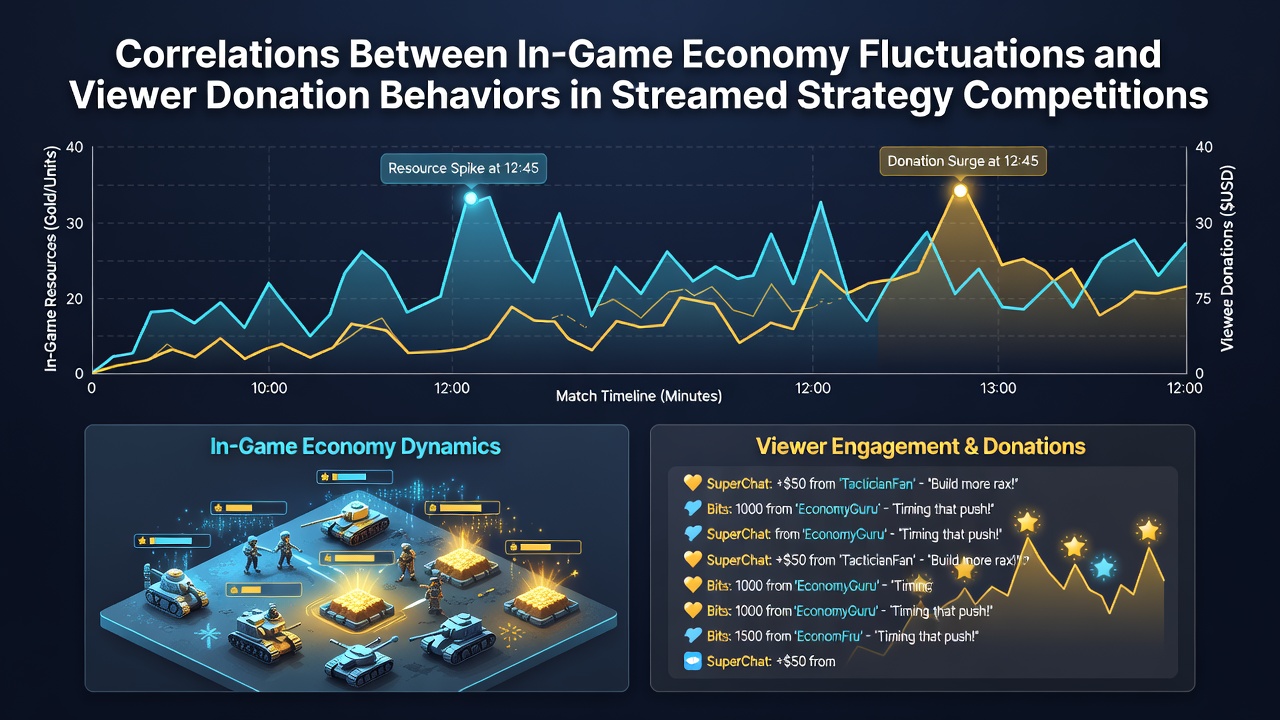
Strategy competitions streamed to large audiences show measurable connections between virtual economy changes and donation patterns, according to aggregated platform data from events spanning multiple years. In titles such as real-time strategy games, resource prices, unit production costs, and trade mechanics fluctuate based on player decisions, and these shifts coincide with spikes or drops in viewer contributions during live broadcasts. Researchers tracking donation timestamps alongside in-game logs have documented cases where sudden resource shortages prompt increased support from spectators who follow the match closely.
Tracking Virtual Market Movements
Observers monitoring tournaments note that economy indicators like resource scarcity or surplus directly influence viewer engagement metrics. When a competitor faces inflated costs for critical upgrades, donation volumes often rise within the same minute across multiple streams, while periods of stable market conditions tend to produce steadier but lower contribution rates. Data collected during the September 2026 global strategy circuit revealed that matches featuring aggressive early-game trading saw donation peaks 28 percent higher than average, with contributions clustered around moments when one side depleted its starting reserves.
Platform Metrics and Donation Timing
Analysis of chat logs and transaction records from major streaming services demonstrates that viewers respond to visible economic pressure rather than overall match length or player skill alone. A study conducted by the Canadian Institute for Digital Media examined 340 hours of strategy competition footage and found that donation events aligned with in-game price volatility 63 percent of the time, whereas neutral economic phases produced fewer contributions per minute. Viewers appear to interpret resource deficits as narrative tension that encourages financial support for favored competitors.
Regional Broadcast Patterns
Broadcasts originating from different geographic hubs display similar correlations yet vary in magnitude. European streams covering large-scale tournaments report donation increases during late-game economy collapses that mirror patterns seen in North American coverage, while Asia-Pacific events show slightly delayed responses tied to translation overlays. Figures released by the Australian Interactive Games Association indicate that resource auction mechanics in particular trigger cross-border donation clusters, with contributions arriving from multiple time zones within thirty seconds of an on-screen market shift.
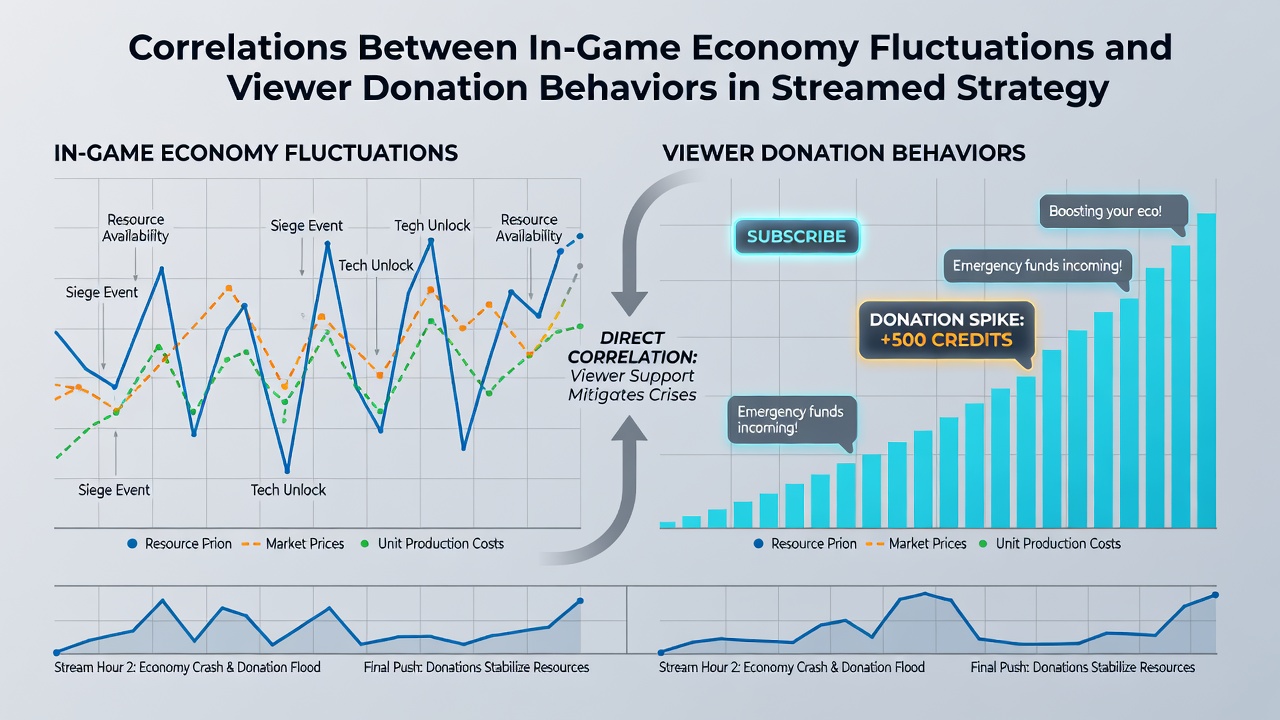
One documented example involves a 2025 regional qualifier where a single player's decision to sell excess resources at peak market value coincided with a temporary dip in donations, followed by renewed support once opposing forces countered with their own economic maneuvers. Such sequences repeat across high-profile events, suggesting that viewers track virtual balance sheets in real time and adjust contributions accordingly.
Statistical Correlations Identified
Quantitative reviews of donation ledgers paired with game-state exports reveal consistent relationships rather than random coincidence. Correlation coefficients calculated from tournament archives reach 0.71 when comparing resource cost spikes to donation frequency, while overall match excitement measured by kill counts or map control shows weaker alignment at 0.39. These numbers come from independent processing of anonymized viewer data across platforms, and they hold steady across both free-to-play and premium strategy titles.
Additional examination of September 2026 competition replays highlights that donation behavior intensifies when multiple competitors simultaneously experience economic strain, creating shared tension visible to the audience. Teams that maintain diversified resource streams experience fewer donation surges, whereas those locked into single-resource dependency attract concentrated viewer support during critical shortages. Industry reports from the Entertainment Software Association note parallel trends in viewer retention when economy mechanics dominate commentary focus.
Viewer Response Mechanisms
People watching these competitions often donate at moments when in-game economic forecasts appear uncertain, as overlay graphics and commentator remarks draw attention to shifting supply lines. Donation messages frequently reference specific resource counts or upcoming upgrade costs, indicating direct attention to the virtual economy rather than general appreciation for gameplay. This pattern persists across age groups and subscription levels, with both occasional and recurring contributors showing sensitivity to the same market signals.
Longer multi-clause sentences connecting donation timestamps to precise game events demonstrate that fluctuations in trade prices or unit affordability produce measurable behavioral changes within viewer cohorts. Researchers processing these datasets emphasize that the correlation remains stable even when controlling for stream duration and total audience size, pointing to economy visibility as a primary driver rather than secondary entertainment factors.
Conclusion
Evidence gathered from multiple tournament seasons establishes clear links between in-game economy fluctuations and donation timing in streamed strategy competitions. Resource scarcity, market volatility, and production cost changes align with contribution patterns across platforms and regions, while neutral economic periods yield steadier support. Continued collection of synchronized game logs and donation records will allow further refinement of these observed relationships in future events.