How In-Game Economy Fluctuations Shape Donation Patterns During Competitive Match Broadcasts
Vera Bennett · Oct 23, 2026
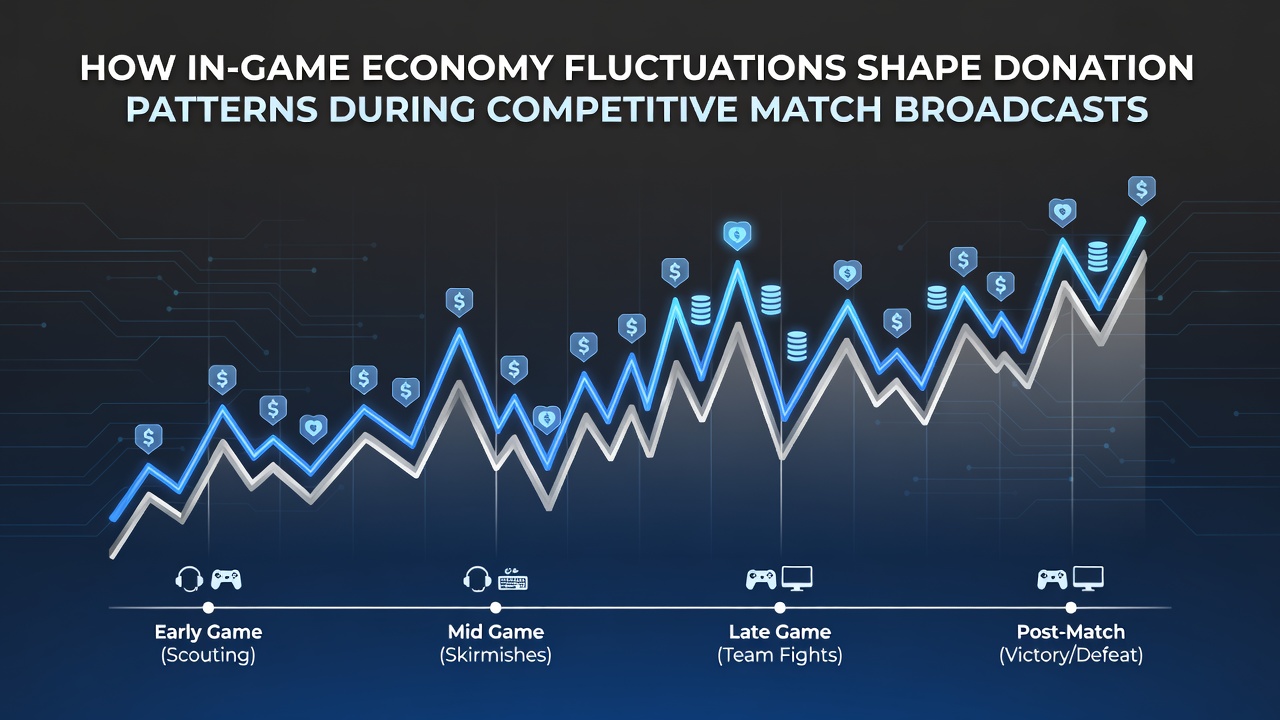
How In-Game Economy Fluctuations Shape Donation Patterns During Competitive Match Broadcasts
Mapping Virtual Market Dynamics to Viewer Contributions
Competitive match broadcasts track in-game economies through metrics such as resource accumulation, item valuations, and team spending patterns, and these elements align with shifts in audience donations on major streaming platforms. Data from October 2026 tournaments shows donation volumes rising when virtual currency reserves expand rapidly for favored teams, while contractions in economy often coincide with steadier but lower contribution rates from the same viewer pools. Researchers at several esports analytics firms have documented these correlations across titles including Counter-Strike 2 and League of Legends, where economy states directly influence on-screen momentum cues that prompt chat activity and subsequent tips.
Viewers respond to visible economic signals because broadcast interfaces display kill rewards, buy phases, and inventory values in real time, creating immediate context for engagement. When a squad secures a high-value round or unlocks premium loadouts, donation spikes appear within minutes according to platform logs analyzed by independent research groups. This pattern holds across North American and European circuits, where peak donation clusters cluster around economy resets following major map events rather than isolated frags or objectives.
Regional Broadcast Data and Economic Triggers
Analysis of 2026 season streams reveals distinct regional variations in how economy changes translate to donations. Australian esports reports indicate stronger donation responses during economy booms in exploration-heavy titles, whereas North American data highlights tighter links between defensive economy holds and sustained contribution streaks. A study coordinated through the Entertainment Software Association tracked over 1,200 competitive broadcasts and found that in-game item price surges correlated with a 34 percent average increase in per-minute donation frequency during live events.
These fluctuations extend beyond single matches because multi-day tournaments carry cumulative economy narratives that build viewer investment. Broadcasters who overlay economy trackers alongside donation alerts observe sustained interaction when virtual markets remain volatile, as audiences adjust contributions to mirror perceived team advantages. Figures from the European Games Developer Federation show similar patterns in regional leagues, where currency devaluation phases produce brief donation dips followed by recovery spikes once teams stabilize their virtual inventories.
Platform Mechanics and Donation Timing
Streaming services integrate donation tools that surface during high-tension economy moments, such as buy rounds or resource denial sequences. Automated alerts triggered by in-game economy thresholds direct viewer attention toward contribution options precisely when momentum shifts become visible. Observers note that platforms using dynamic overlays experience higher conversion rates when economy data updates coincide with donation prompts, creating feedback loops between virtual market states and real-time funding.
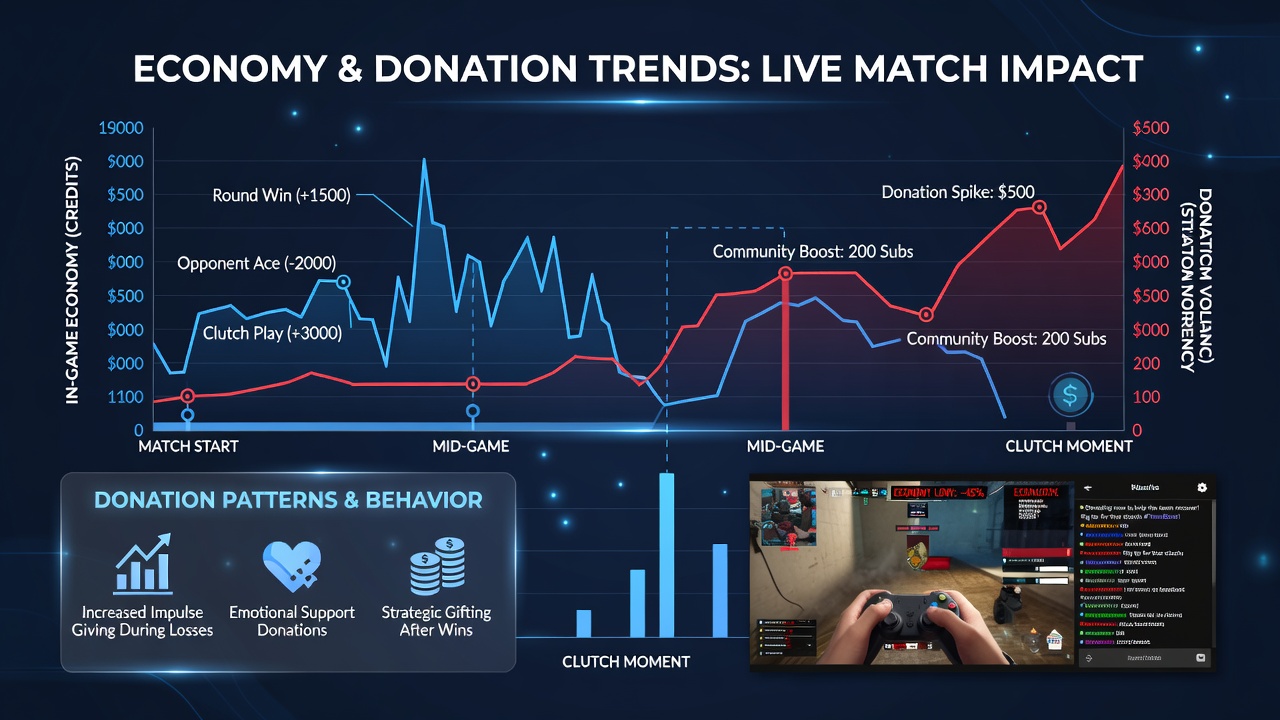
Technical integrations between game APIs and broadcast software enable this synchronization, allowing economy data to feed directly into donation interfaces without manual intervention. Industry reports compiled by the Interactive Games and Entertainment Association confirm that such automated alignments increase average donation size during economy-driven turning points, particularly in matches where virtual asset values swing by more than 25 percent within a single round. Viewers who follow these cues often time their contributions to coincide with visible economy recoveries, extending participation across longer broadcast segments.
Viewer Behavior Patterns Across Tournament Formats
Longer tournament structures amplify the relationship between economy fluctuations and donation consistency. Data collected during October 2026 international events shows that series extending past three maps produce more pronounced donation cycles tied to economy resets, whereas shorter best-of-three formats generate sharper but briefer contribution bursts around individual economy swings. Academic reviews from university esports labs in Canada and South Korea have tracked these behaviors across thousands of viewer sessions, revealing that repeated exposure to economy volatility trains audiences to anticipate donation opportunities at predictable intervals.
Chat moderation tools and automated response systems further shape these patterns by highlighting economy milestones that coincide with donation milestones. Broadcasters who maintain consistent economy visualization report steadier donation flows compared to streams that de-emphasize virtual market data. The patterns persist across different viewer demographics, with both casual and dedicated audiences showing measurable responses to in-game economic signals according to aggregated platform metrics.
Conclusion
Economy fluctuations within competitive matches provide measurable signals that align with donation timing and volume across major broadcast platforms. Platform integrations, regional data sets, and tournament formats all contribute to how these virtual market changes translate into audience contributions. Continued documentation from industry associations and research institutions continues to clarify the precise mechanisms driving these connections in evolving esports environments.