Procedural World Mechanics Force Streamers to Rethink Narrative Delivery During Extended Exploration Sessions
Parker Hansen · Nov 6, 2026
Procedural World Mechanics Force Streamers to Rethink Narrative Delivery During Extended Exploration Sessions
Procedural Generation Basics in Modern Titles
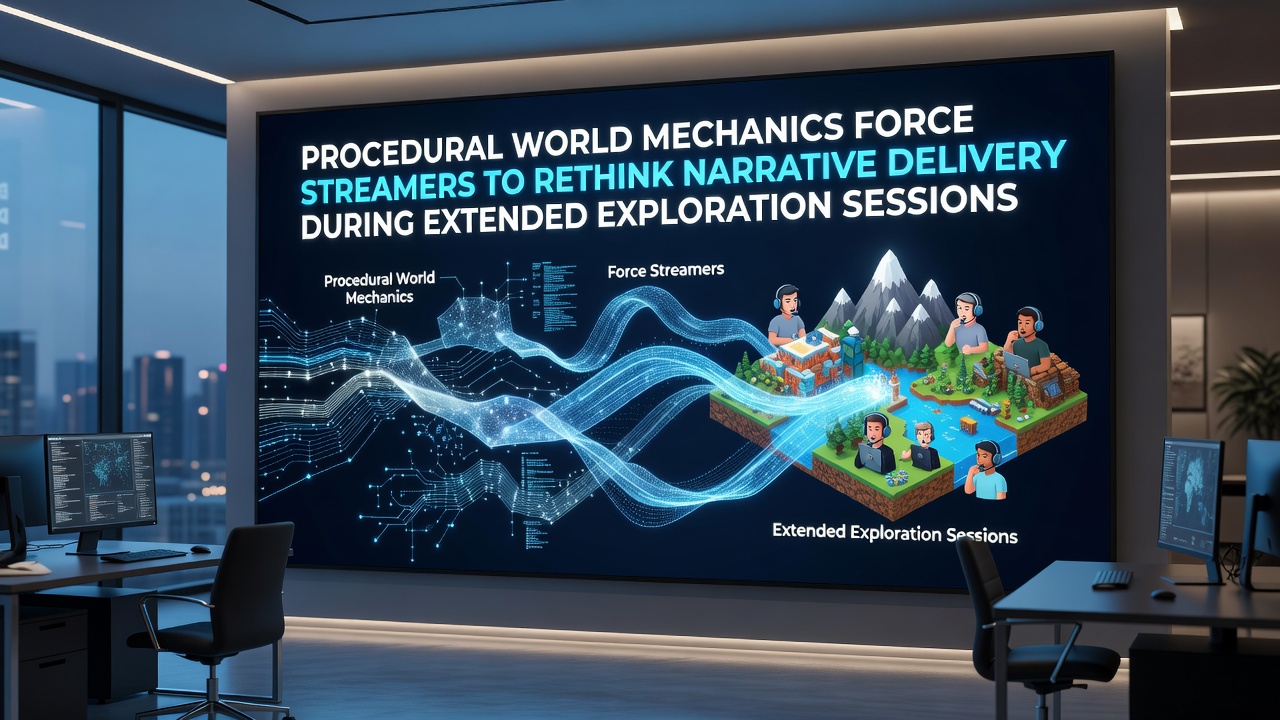
Procedural world mechanics generate environments through algorithms rather than fixed designs, and this process creates unique landscapes each time players enter a session. Games such as No Man's Sky and Valheim rely on these systems to produce terrain, resources, and structures on demand, which means streamers encounter unpredictable elements during extended broadcasts. Data from industry reports show that session lengths in exploration-focused titles often exceed four hours, forcing adjustments to how stories unfold on camera.
Challenges for Narrative Flow
Streamers face interruptions when procedural systems introduce unexpected events, such as sudden weather shifts or rare resource spawns that divert attention from planned commentary. Research indicates these mechanics disrupt linear storytelling because the world evolves independently of player intent, and observers note that commentators must improvise connections between random discoveries. In titles with voxel-based generation, for instance, cave systems appear differently across streams, which alters the sequence of revelations and requires real-time reframing of events.
Extended exploration sessions amplify these issues because cumulative discoveries build over time without a scripted arc. Streamers report that maintaining viewer engagement demands constant recalibration of narrative emphasis, while data from platform analytics reveal drops in retention during periods of repetitive terrain traversal. According to figures released by the Entertainment Software Association, exploration genres accounted for 28 percent of top-viewed streams in 2025, highlighting the scale of adaptation required.
Adaptation Strategies Observed in Practice
Many broadcasters integrate modular storytelling techniques that treat procedural outputs as plot points rather than obstacles. They pause to describe emerging patterns in the generated world, then link those details to broader themes within the game. One documented approach involves layering secondary narratives around player actions, such as tracking resource collection as character development, and this method appears in multiple high-viewership channels covering survival exploration titles.
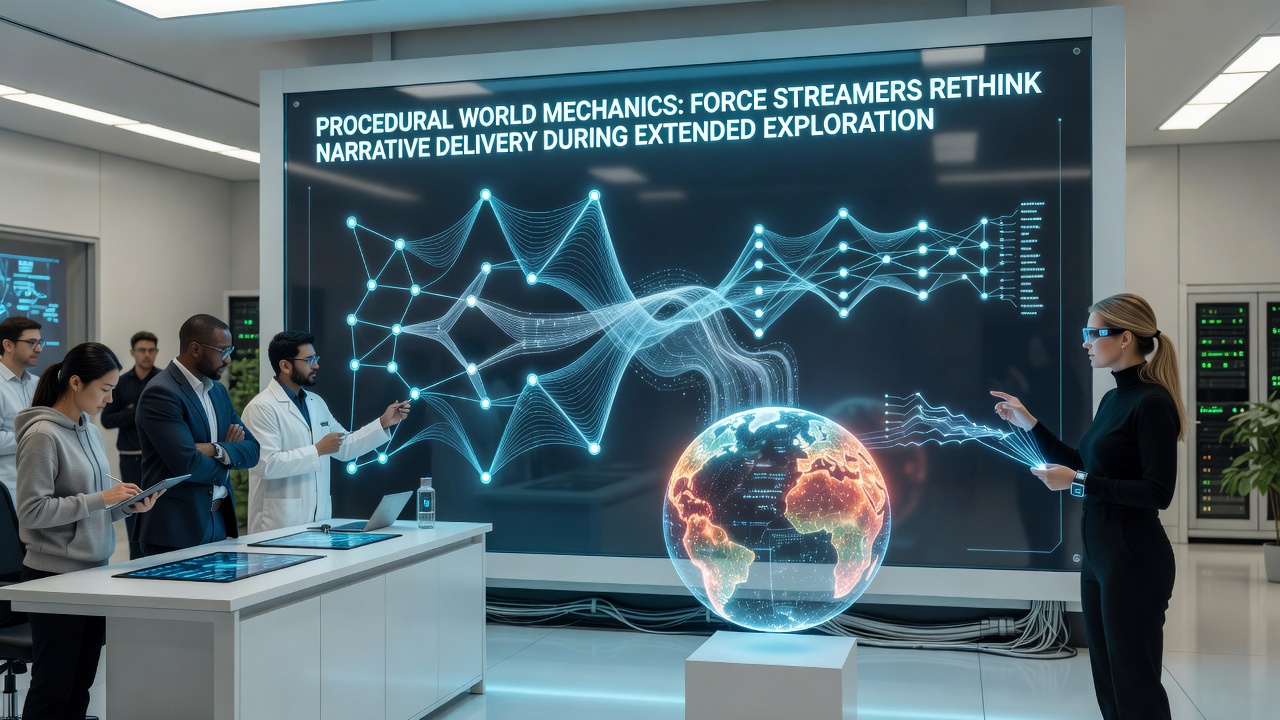
Technical tools assist these adjustments. Overlay software tracks generation seeds and displays them alongside live footage, allowing quick references to past sessions for continuity. Studies from the University of Alberta found that viewers retained attention longer when commentators referenced prior procedural variations, suggesting measurable benefits from such preparations. Streamers also employ branching commentary scripts that activate based on detected biome types, which reduces dead air during long treks.
Viewer Metrics and Platform Trends
Platform data collected through November 2026 shows increased average watch times for streams that explicitly address procedural variability in real time. Viewers in different regions respond differently to these methods, with audiences in Asia-Pacific markets favoring detailed environmental breakdowns over action-focused narration. Industry organizations like the Interactive Games and Entertainment Association track these patterns and report that procedural-heavy games drive higher concurrent chat activity during exploration phases compared to linear narratives.
Coordination among distributed player groups adds another layer, as cooperative streams must synchronize narrative threads across multiple generated instances. Researchers at institutions in Canada have examined how shared maps and seed logs help maintain coherent delivery despite independent world states, and their findings indicate reduced confusion when teams predefine thematic anchors before sessions begin.
Conclusion
Procedural world mechanics continue to reshape narrative techniques across extended exploration broadcasts, and streamers respond with flexible frameworks that incorporate randomness into ongoing stories. Metrics from multiple sources confirm sustained interest when delivery adapts to generated content, while tools and preparation methods support smoother transitions between discoveries. These patterns reflect ongoing evolution in how live content aligns with algorithm-driven environments.